









USD
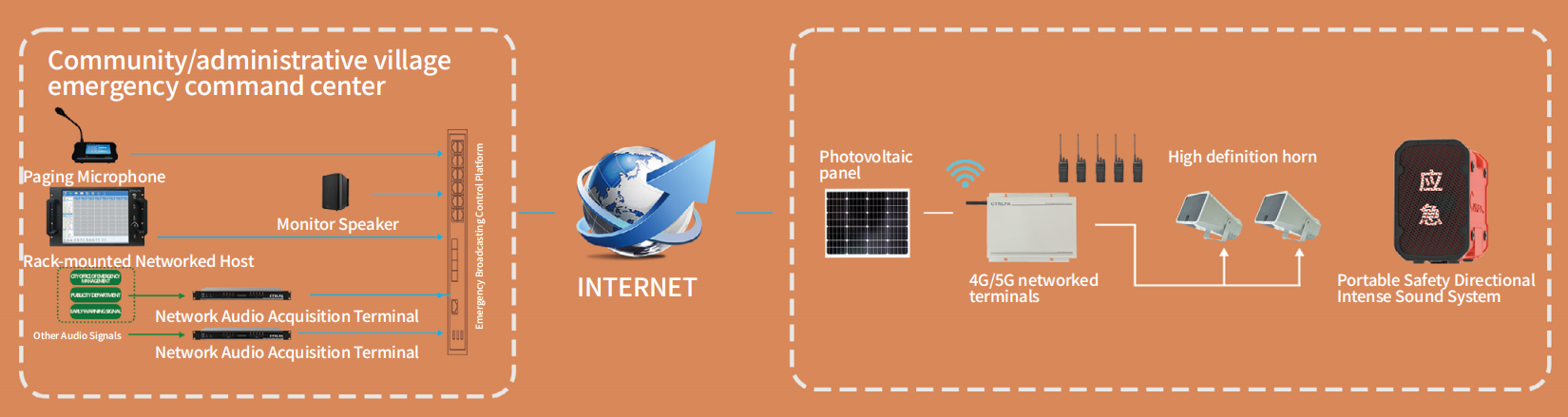
Ⅰ The concept of the emergency broadcasting system
As a rapid and efficient messaging platform and information transmission channel, the emergency broadcasting system can promptly deliver disaster alerts or information about potential hazards to the public during emergencies such as wars, major natural disasters, sudden incidents, and public health or social security crises. It ensures that the public is immediately informed of the situation and provided with guidance on emergency response and evacuation, thereby minimizing the loss of public resources and protecting people's lives and property.
Following the basic principles of "integrated planning, hierarchical construction, security and reliability, rapid efficiency, and dual-use for both peacetime and emergencies," the emergency broadcasting platform will be established. This involves improving the transmission and coverage network of emergency broadcasting, deploying emergency broadcasting terminals, and enhancing the capability to disseminate information during various emergencies. Interfaces for future integration with provincial/municipal emergency broadcasting platforms will be reserved. Once completed, the system will form a unified, authoritative, unimpeded, secure, and effective information dissemination system, primarily based on IP/4G networks. This will enable urban and rural residents to receive broadcast programs in a timely manner, significantly improving the government's ability to make emergency decisions and respond to incidents, as well as enhancing the timeliness and reach of public emergency alert reception. The goal is to ensure prompt information release and response, reduce casualties, and minimize losses.
Ⅱ Functional Description
To ensure the effectiveness of a regional emergency broadcasting system in delivering security alerts and facilitating rescue command and control, thereby minimizing disaster-related losses, its functionality differs from traditional broadcasting systems by emphasizing emergency response capabilities and large-scale, integrated control.
The system possesses the following features:
Ⅲ System Construction Plan
1.Control Center
The control center control the emergency broadcasting throughout the district and builds a district-level control platform.
Including the following functions:
(1)The control center can independently or uniformly control and manage the emergency broadcasting in all areas within its jurisdiction, broadcasting daily program content and releasing emergency information.
(2)he system transmits through network signals to ensure the effective coverage.
(3)It can independently release local audio program content.
(4)Terminal information transmission platforms can be built through wired or wireless means.
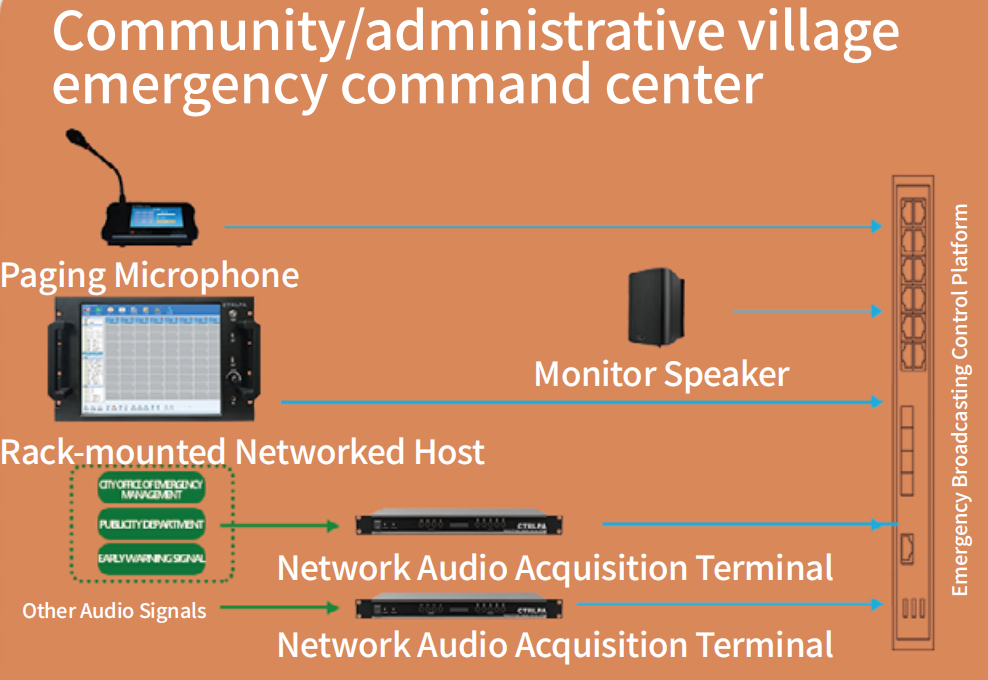
Structure Diagram of the Control Center
The village and community terminal platform is an emergency broadcasting platform for the grassroots people, directly broadcast information and ultimately solves the problems of information transmission in emergency early warning and rescue command in the "last mile".
Including the following functions:
(1)Receive program information from the control center;
(2)It can independently broadcast local audio program content.
(3)The information transmission platform of the terminal can be built through wired or wireless means.
(4)In communities, villages and other environments, directional sound intensifiers can be selected as the terminal equipment for regional sound reinforcement.
(5)Managers can directly dispatch and broadcast grassroots broadcasts and make emergency announcements through the mobile phone APP.
(6)Equipped with a portable emergency directional intense sound system, it can serve as an emergency mobile broadcasting station for safety emergency early warning and rescue command when the fixed broadcasting system becomes unusable due to severe disasters.
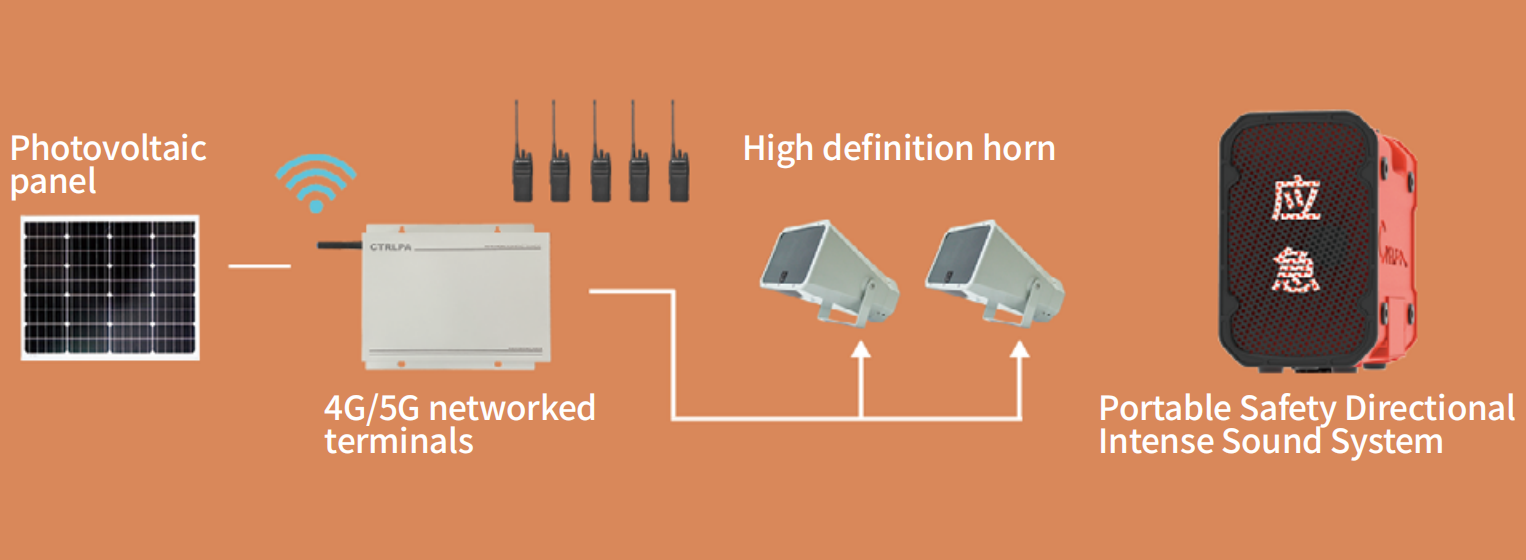
Structure Diagram of Village/Community terminal platform
Ⅳ System and Equipment List
Control Center:
1. Network IP Broadcasting Server Software
2. Internet paging station
3. Network Wall Speaker
4. Network IP Audio Acquisition Terminal
Terminal platform:
1. Networked remote sub-control software
2. Mobile phone App software
3. 4G intercom networked playback terminal
4. High Definition Horn
5. Intercom
6. Solar panels power supply system


